Riding on Wet, Slippery Roads: Why Tyre Choice Matters More Than Speed
Start with a vivid scenario of a sudden Malaysian downpour in KL, the moment your rear tyre slides, then pivot to the thesis: tyre choice, not just slowing down, is your real lifeline.
Introduction: The Real Risk of Malaysia’s Wet Roads
To stay upright when Malaysia’s skies crack open, pick tyres with deep, silica-rich treads that stay soft and grippy on wet asphalt. One moment the road is dry, then a tropical downpour floods it in seconds, hiding diesel slicks and potholes beneath a deceptive mirror. MIROS data consistently shows wet-weather factors in a large share of motorcycle fatalities, and simply slowing down isn’t always enough—your tyres are the only contact patch you have. Choosing rubber that your life depends on, not just any pair that fits, is what really decides whether you slide or ride through the storm.
How Tyre Tread Patterns Divert Water and Keep You Upright
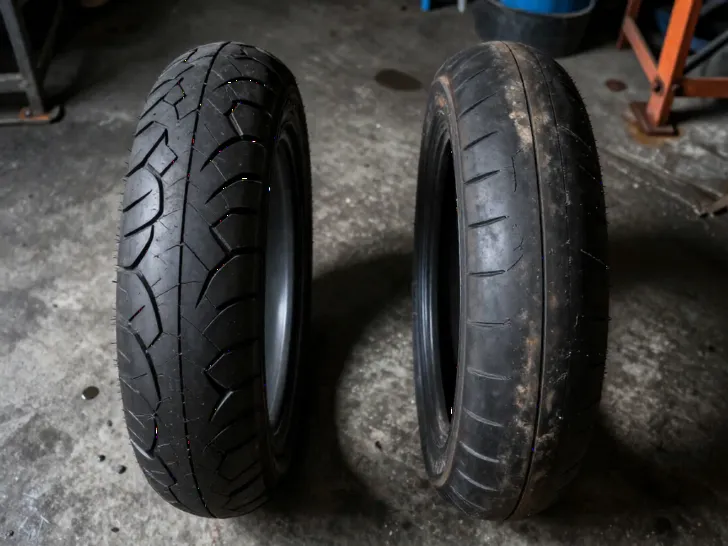
Hydroplaning starts the moment your tyre can’t squeeze water out fast enough. A wedge of water builds under the leading edge of the contact patch, lifts the rubber off the road, and you suddenly have zero steering or braking. The three variables that decide whether you skate or grip are water depth, road speed, and the tyre’s ability to evacuate water. On a Malaysian downpour, even a few millimetres of standing water can overwhelm a worn or poorly designed tread at speeds as low as 60 km/h. That’s why tread geometry isn’t just a cosmetic squiggle; it’s a hydraulic pump.
Directional tread patterns are built to cut through water like a ship’s bow. The V-shaped grooves funnel liquid outward from the centre to the shoulders, keeping the contact patch as dry as possible when you’re riding straight. This design shines on highways during tropical storms—Michelin’s City Grip 2 and Pirelli’s Angel Scooter use a central groove that channels water rearward, which also stabilises the bike when you hit a puddle. Asymmetric treads take a different approach: they sacrifice pure water-pumping efficiency for balanced performance. The outer tread blocks are larger and stiffer, giving you lean-angle grip on wet corners, while the inner portion packs more grooves to evacuate water under hard braking. For a scooter rider who tackles KL’s mixed roads, an asymmetric tyre like the Metzeler Roadtec Scooter gives confidence when you have to brake mid-corner on a slick flyover.
Tread depth is the first number riders check, and for good reason. A tyre worn down to 2 mm might look okay, but it will hydroplane at a noticeably lower speed than a new tyre with 8 mm. That’s because shallow grooves can’t hold a big enough volume of water, so the wedge forms earlier. But depth alone is a blunt tool. Sipes—those tiny, almost invisible slits in the tread blocks—act like micro-pumps. They suck the last film of water into the void and also flex to generate biting edges. A tyre engineered with high-density siping, like the Bridgestone Battlax SC2 Rain, will feel planted even when the road surface is greasy with oil-diluted water after a dry spell. The other half of the story is the compound. Silica-infused rubber remains pliable at lower temperatures, and that softness lets the tread surface interlock with the rough texture of asphalt. Without silica, a tyre tread can be deep and still lose grip because the compound turns hard when soaked and cooled by rainwater.
You don’t need to become a materials scientist to shop for wet-weather tyres. In the Malaysian market, many performance scooter and motorcycle tyres carry a European-style wet grip label, usually rated A to E. An A-rated tyre stops over 18 metres shorter on wet roads than an E-rated equivalent—more than enough space to avoid a stopped car. When you inspect a tyre on the rack, run your thumb across the tread. Look for sharp sipe edges that haven’t been rounded by heat-cycling, and pay attention to how the grooves taper toward the shoulder. A sudden end to the groove can trap water at the edge of the contact patch, causing momentary drift when the bike leans. Finally, match the pattern to your riding. If you spend most of your time on straight trunk roads at 80 km/h, a directional tread with a deep centre channel will give the best hydroplane resistance. If you flick through city traffic and lean hard over uneven drains, an asymmetric design with fierce shoulder blocks and a softer silica compound will catch you when the surface gives way.
The Science of Rubber Compounds: Soft vs Hard in the Rain
Your contact patch is barely larger than a credit card, yet it’s the only thing keeping you upright on a rain‑soaked Malaysian road. Tread patterns siphon water away, but the rubber compound itself does the heavy lifting at the molecular level. The secret weapon inside a wet‑weather tyre is silica. Traditional carbon black strengthens rubber but doesn’t play well with water. Silica, however, is hydrophilic — it forms a weak bond with the thin film of water that remains on the road, effectively tearing it apart so the rubber can grab the asphalt underneath. That’s why a silica‑rich compound offers noticeably shorter braking distances in the wet, even when the tread is identical.
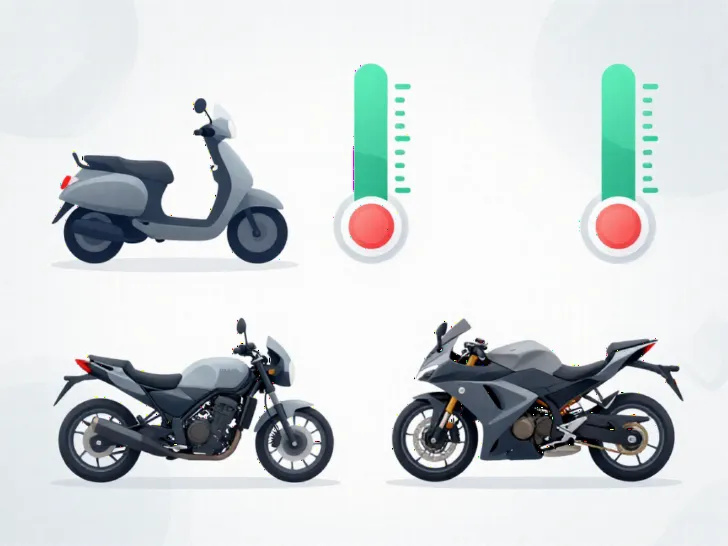
Heat changes everything. Rubber hardens as it cools and softens as it warms, and the ideal operating window for street tyres is typically between 50°C and 80°C. In Malaysia, stuck‑still traffic can let tyres cool to ambient temperature, around 30°C, while spirited riding on a hot afternoon can push the surface past 70°C within minutes. A tyre that feels wooden when you first pull away might not have warmed up yet. Conversely, a tyre that turns greasy halfway through your commute has likely overheated. The trick is matching the compound’s heat behaviour to your typical ride profile.
Soft compound tyres — think of brands like Pirelli Diablo Rosso Scooter or Michelin Pilot Street 2 — use a high ratio of synthetic rubber blended with silica and other grip‑enhancing additives. They heat up fast, often reaching optimal stickiness within the first kilometre, which is a lifesaver when an unexpected downpour hits right after you leave the carpark. The trade‑off is longevity. Continuous exposure to Malaysia’s scorching midday sun and coarse chip‑seal roads can chew through a soft rear tyre in 6,000 to 10,000 km. Hard compound tyres, on the other hand, are built to last. A touring‑focused model like the Michelin City Grip 2 or a dual‑sport knobby can easily clock 15,000 km or more. But they demand patience. Until they build enough heat, the rubber stays relatively stiff, reducing contact with road micro‑texture and making them feel slippery in the rain. If your commute is a mild, steady 60 km/h run down the Federal Highway, the hard tyre might never get properly warm, leaving you with the grip of a hockey puck every time it drizzles.
This is where riding style and local weather flip the decision. For the rider who treats every kampung road like a corner entry, soft is the only answer — the extra confidence under braking and lean is worth the more frequent tyre changes. If you’re a relaxed commuter who just wants a tyre that’ll survive two years of school runs and pasar malam trips, a medium or hard compound with a reputable silica formulation still gives you a safety net, provided you ride gently until the rubber wakes up. And don’t ignore the split personality of dual‑compound tyres. Many modern scooter tyres mould a harder centre strip for highway heat resistance with softer shoulders for cornering grip. That’s a particularly clever match for Malaysia, where straight‑line heat buildup can ruin a pure soft compound but the sudden appearance of a yellow‑striped speed bump demands emergency lean. Forget the old myth that you should automatically pick the hardest tyre for wet roads. The science says something different: if the water can’t be cleared, you need a compound that bites through it, and that usually means a higher silica content and a carefully chosen hardness that stays within its working temperature range during your type of ride.
Tyre Pressure: The Hidden Variable That Can Make or Break Grip
Correct tyre pressure does more than just keep your ride comfortable—it directly shapes the contact patch where rubber meets road. Over-inflate by even a few PSI, and the tread crowns outward, shrinking that critical footprint and making it easier for water to sneak underneath. Under-inflate, and the tyre squishes sideways under load, distorting the tread pattern meant to evacuate water. Either mistake leaves you with dangerously less grip on a rain-soaked Malaysian road than a properly inflated tyre.
Always check pressure when the tyres are cold—before you ride, or at least three hours after parking. Heat from riding expands the air inside, giving a false high reading. For daily commuting, stick to the manufacturer’s recommended figure, usually found on a sticker under the seat or on the swingarm. If you’re carrying a pillion or loaded with luggage, increase the rear pressure by 2-4 PSI (check your manual for exact numbers) to maintain stability and keep the contact patch from flattening out too much under the extra weight.
A stubborn myth says you should let air out to “soften” the tyre for better wet grip. Don’t do it. Reduced pressure makes the sidewalls flex unpredictably, the carcass runs hotter, and the tyre squirms through corners—exactly the kind of instability that leads to loss of traction mid-lean. You’ll also scrub off the edges of the tread prematurely, ruining a good tyre long before its time.
For the most popular Malaysian scooters and motorbikes—think Yamaha 135LC, Honda RS150, Modenas Karisma, or even larger machines like the Kawasaki Ninja 250—recommended pressures usually sit between 29 and 33 PSI for the front and 32 to 36 PSI for the rear when riding solo. Always verify with your owner’s manual, and make a tyre gauge part of your pre-ride routine. It’s a small check that can save you from a painful slide when the skies open.
Know When to Retire Your Tyres: Tread Depth, Age, and Damage Signs
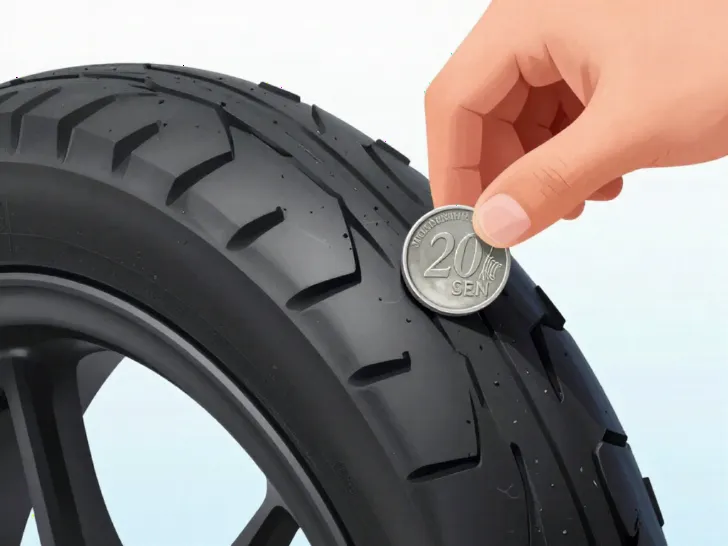
Your tyres are the only thing keeping you upright on rain-slick asphalt, and worn tread is a disaster waiting to happen. In Malaysia, the legal minimum tread depth is 1.6 mm, but for our frequent downpours, you should replace tyres once they hit 2–3 mm. That extra rubber depth is what channels water away and prevents hydroplaning.
A quick DIY check is the 20 sen coin test. Slot the coin into the main tread grooves with the ‘20’ facing you. If the text of ‘SEN’ is still visible above the tread, you’re below the safe zone and need new rubber. Always measure across multiple points on each tyre—wear can be uneven.
Beyond tread depth, give your tyres a visual once-over every week. Look for cracks, cuts, bulges, or embedded stones. Any irregular wear pattern—like cupping or flat spots—hints at incorrect pressure or suspension issues and demands immediate attention.
Finally, remember that rubber ages even if the tread looks deep. A tyre older than five years can harden and lose grip, especially on wet roads. Check the DOT code on the sidewall (the last four digits show the week and year of manufacture). If yours are nearing their fifth birthday, plan a change even if they pass the coin test.
Riding Techniques That Complement Good Tyres in the Wet
Even when you've fitted a set of well-siped, soft-compound tyres, they can't save you from ham-fisted inputs. In the wet, available grip is a fraction of what you'd have on dry tarmac, so every control movement must be gradual. Roll the throttle on as if there's an egg between your palm and the grip. Squeeze the brake lever progressively—never snatch it. The goal is to transfer weight smoothly, keeping the contact patches loaded without sudden spikes that could break traction.
Braking earlier and with less force is non-negotiable, even on premium wet-weather rubber. Start slowing down well before you normally would, and use a lighter touch on both brakes. A gentle initial squeeze compresses the forks and plants the front tyre, giving you more bite before you ramp up pressure. Avoid relying solely on the front brake; bring the rear in gently to settle the bike. Engine braking by rolling off early also reduces the workload on your tyres and keeps the bike stable.
Cornering in the rain demands a different line and less lean angle. Stay more upright by moving your body slightly to the inside of the bend, keeping the bike itself more vertical where the tread can work best. Scan ahead for the cleanest line—away from painted arrows, lane markings, and metal manhole covers, all of which turn treacherously slick. Malaysian roads throw extra hazards at you: steel plates covering utility works, diesel spills at bus stops and junctions, and the almost invisible oil slick that forms at traffic light stop lines. Give these areas a wide berth or coast over them with zero throttle and no steering input. Even excellent tyres need your help to find the driest, grippiest path.
Conclusion: Your Tyre Safety Checklist
Before every ride, give your tyres a quick check: tread depth should be well above 2mm—don’t wait until the monsoon exposes worn grooves—and pressure must match your scooter’s spec. When shopping, pick a model with deep, directional sipes and a silica-rich compound; they’re designed to cut through standing water better than budget rubber.
Ride with smooth throttle and brake inputs, and always look ahead to avoid puddles that hide potholes. That’s the formula for staying rubber-side down on wet Malaysian roads.